
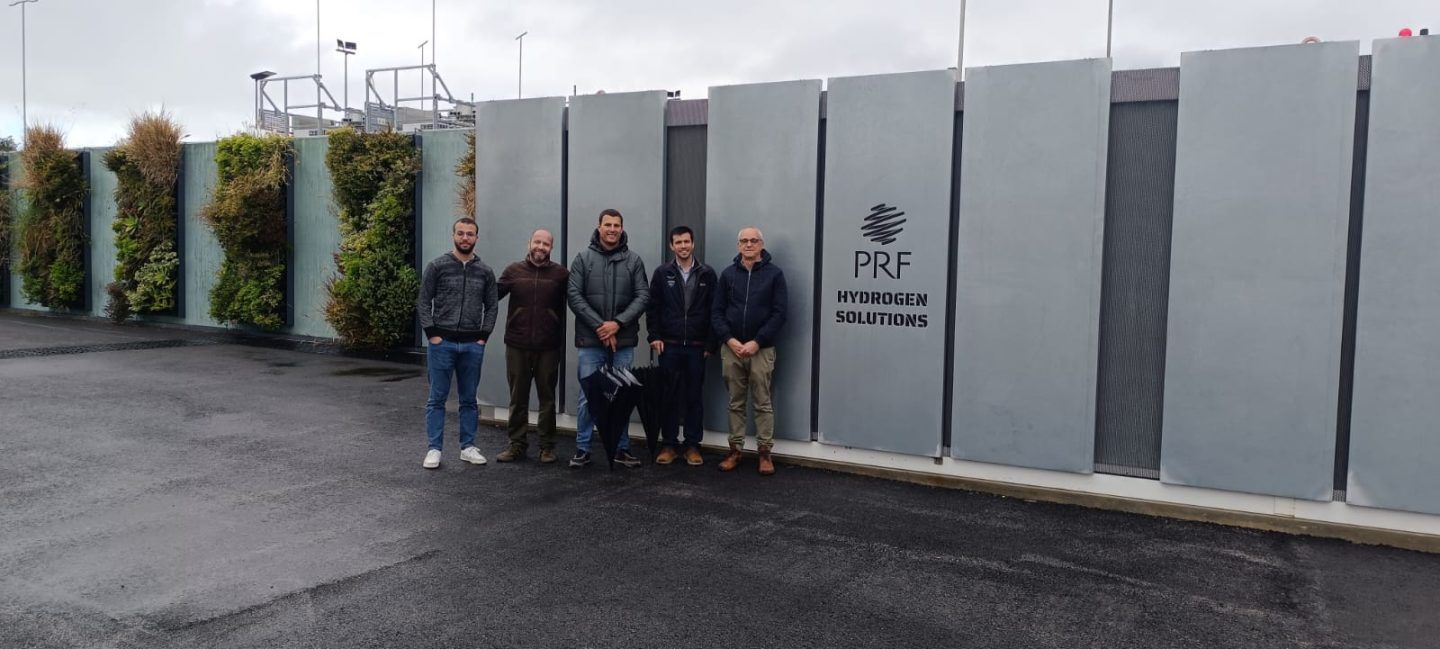
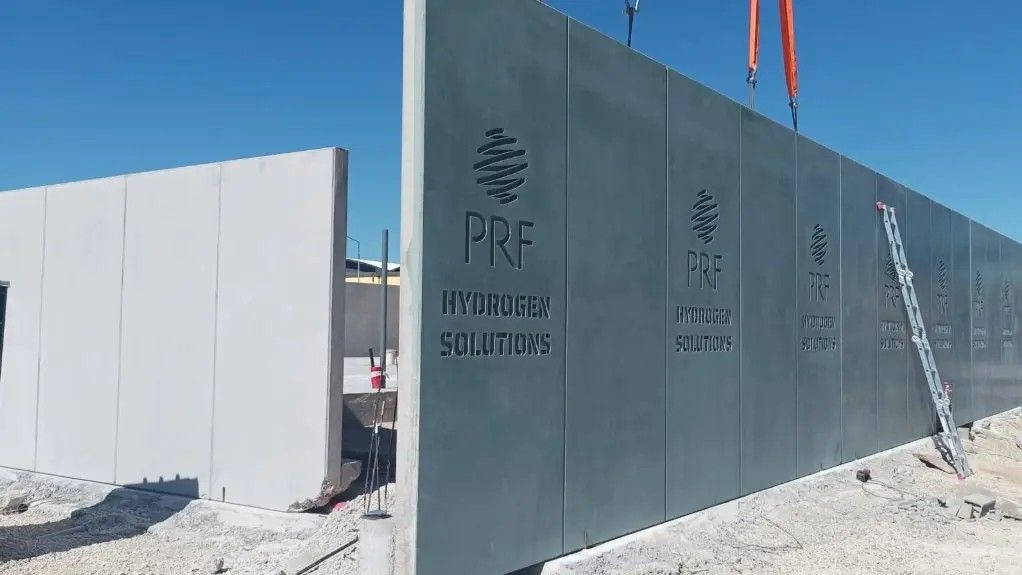
On 7 April 2026, a delegation from the University of Évora visited the hydrogen production and refuelling facility operated by Cascais Próxima, within the framework of the H2tALENT project . The visit brought together key members of the project team, including the Project Coordinator, Project Manager, researchers from HyLab, and students, and was hosted by PRF Gas Solutions. Beyond a technical tour, the visit offered a valuable opportunity to explore the practical implementation of hydrogen technologies in a real operational environment.
An Integrated Approach to Hydrogen Infrastructure
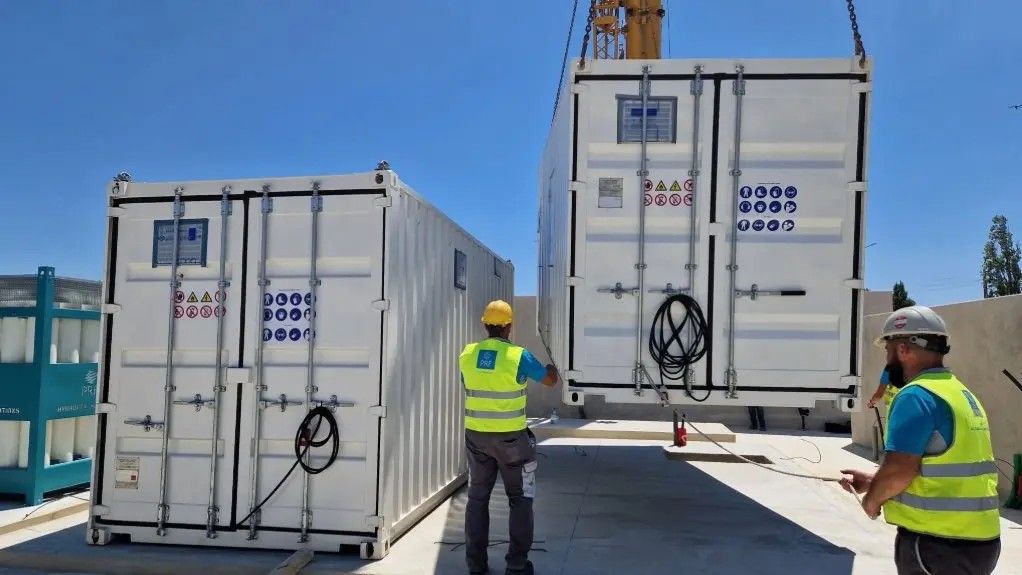
The Cascais facility represents one of the most advanced municipal hydrogen infrastructures currently operating in Portugal. Its design is based on a fully integrated system that combines hydrogen production, storage and refuelling within a single site. This approach not only simplifies logistics but also enhances overall system efficiency.
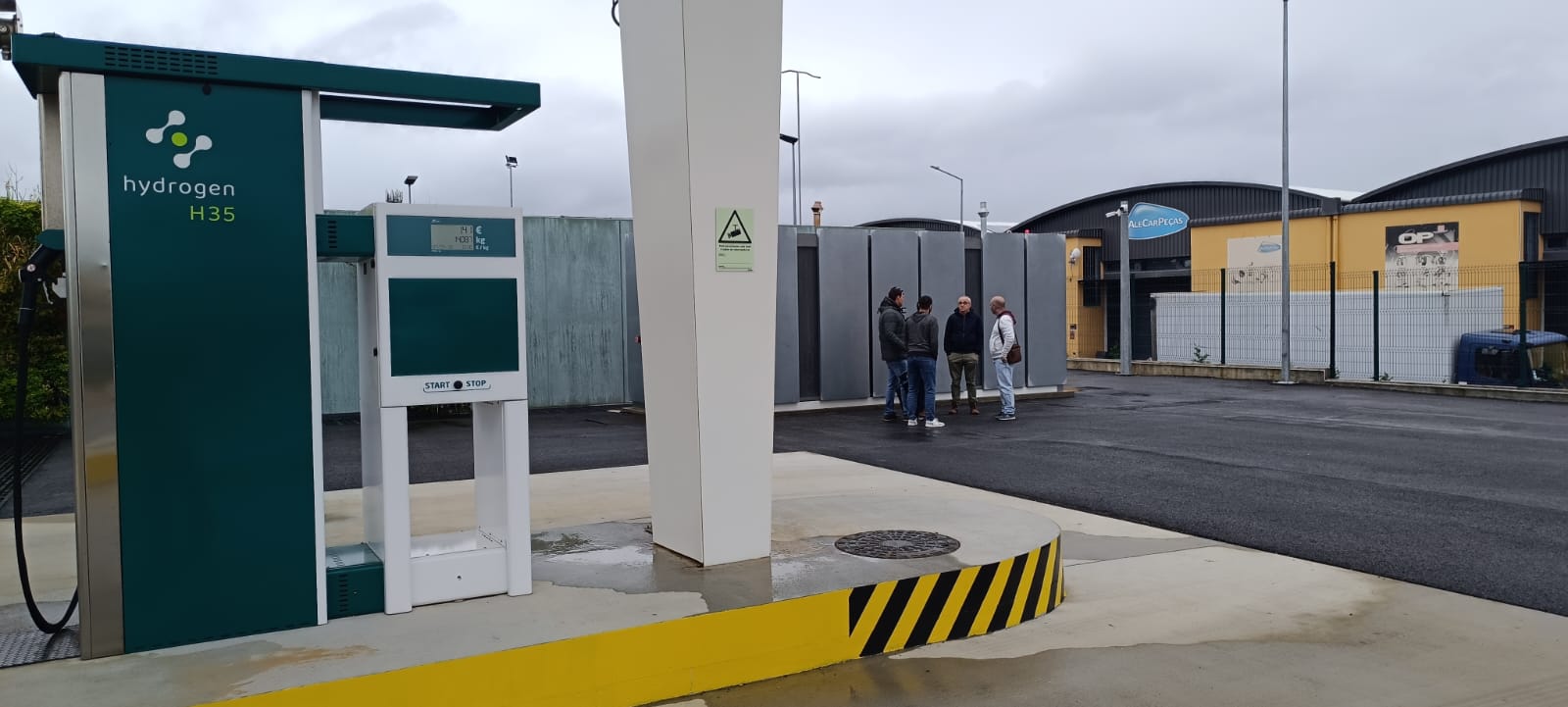
At the core of the installation are two 0.5 MW electrolyzers, which enable on-site hydrogen production. The Hydrogen Refuelling Station is equipped to operate at two pressure levels, with 350 bar already in use for public transport applications and 700 bar planned for future light-duty vehicles. This dual configuration reflects a forward-looking design capable of accommodating different mobility needs as hydrogen adoption expands.
The electricity used in the electrolysis process is sourced from the grid and supported by guarantees of origin from renewable sources. This ensures that the hydrogen produced maintains a low-carbon profile, aligning with broader decarbonisation objectives.
Hydrogen Mobility in Practice
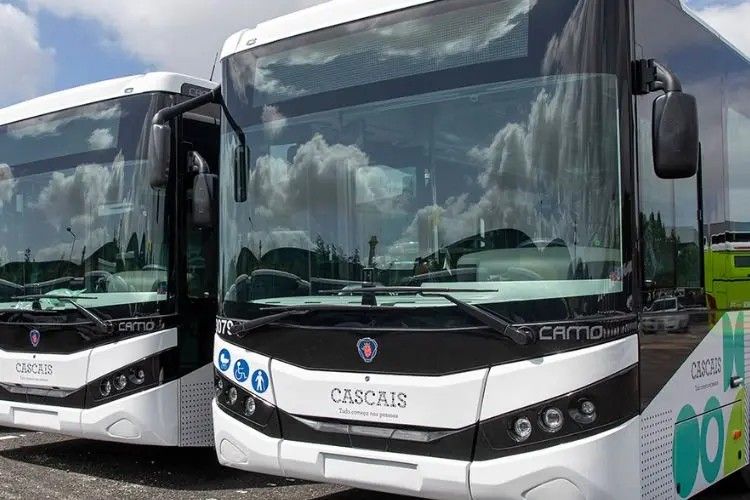
One of the most significant aspects of the Cascais facility is its direct application in public transport. The system currently supplies hydrogen to a growing fleet of buses, demonstrating that hydrogen mobility is no longer a theoretical concept but an operational reality. With several buses already in service and further expansion expected, the project illustrates how municipalities can actively transition towards cleaner transport solutions.
The infrastructure is designed to support this growth, with a production capacity of up to approximately 389 kilograms of hydrogen per day. This allows for both current operations and future scaling, ensuring that increasing demand can be met without requiring fundamental redesigns.
The visit highlighted the advantages of hydrogen as a fuel for public transport. Compared to battery-based alternatives, hydrogen-powered vehicles offer longer driving ranges and significantly shorter refuelling times, making them particularly suitable for intensive daily operations where downtime must be minimised.
Lessons for the H2tALENT Project
The Cascais Próxima facility provides important insights for the H2tALENT project, particularly in relation to the development of hydrogen-based mobility solutions. One of the key takeaways is the value of integrating production and refuelling within a single system, which reduces complexity and improves operational performance.
Another important observation is the demonstrated viability of hydrogen as a solution for decarbonising public transport at the municipal level. The system’s flexibility and scalability further reinforce its potential, as it can evolve in line with demand and technological developments.
These findings are especially relevant for the planned mobility demonstrator in Alandroal. Given that PRF Gas Solutions is also involved in the development of the future hydrogen refuelling station in that location, the experience gained in Cascais provides a strong foundation for informed decision-making and implementation.
Contributing to the Energy Transition
Beyond its technical and operational aspects, the Cascais project stands as a compelling example of how local initiatives can contribute to broader European energy transition goals. By integrating hydrogen into public transport systems, the project supports the reduction of greenhouse gas emissions while promoting more sustainable urban mobility.
In addition, ongoing efforts to explore alternative hydrogen production pathways, such as waste-to-hydrogen processes, highlight the project’s alignment with circular economy principles. This combination of innovation and practical application reinforces its role in advancing climate neutrality objectives.
The Cascais Próxima facility demonstrates that hydrogen mobility is no longer a future ambition, but a present-day reality. By integrating production, storage and refuelling within a single system, it offers a scalable and operational model for municipalities aiming to decarbonise transport.
Beyond its technical performance, the project highlights a broader shift: the energy transition is moving from pilot initiatives to real-world deployment. As similar infrastructures are developed across Europe, experiences like Cascais provide essential knowledge to accelerate implementation and reduce uncertainty.
For initiatives such as H2tALENT, this is not just a reference point, but a clear indication of what is already possible—and what comes next.