
Green hydrogen and Europe’s energy transition
This article builds on the findings of a recent peer-reviewed scientific publication that assesses the potential role of solar-powered green hydrogen in Europe’s energy transition. As the EU accelerates its move towards a climate-neutral energy system, renewable hydrogen is increasingly recognised as a key enabler to decarbonise hard-to-electrify sectors and support the integration of renewable energy sources. In this context, evidence-based, data-driven analyses are essential to identify where hydrogen can be produced at scale and at competitive cost, and to inform policy, investment and initiatives such as Hydrogen Valleys.
Hydrogen is increasingly seen as one of the key cornerstones of a future energy system powered by renewables. As Europe steps up its defossilization efforts, “green” hydrogen, produced from renewable sources, is set to play a major role, not only in industry but also in transport, buildings and large-scale energy storage. To meet this rising demand, it is required to identify locations where hydrogen can be produced affordably and at scale.
This study explores the potential of solar-powered water electrolysis for renewable hydrogen production in Portugal. The rationale is clear: photovoltaic technology and electrolysers are now mature and increasingly cost-competitive, and Portugal benefits from excellent solar resources, particularly in the southern regions.
Using 23 years of hourly meteorological data from across mainland Portugal, we created representative annual meteorological profiles and simulated a 120 MWp photovoltaic plant. The electricity generated was then used to model hydrogen production and estimate realistic production costs.
Key results: mapping solar hydrogen potential and costs
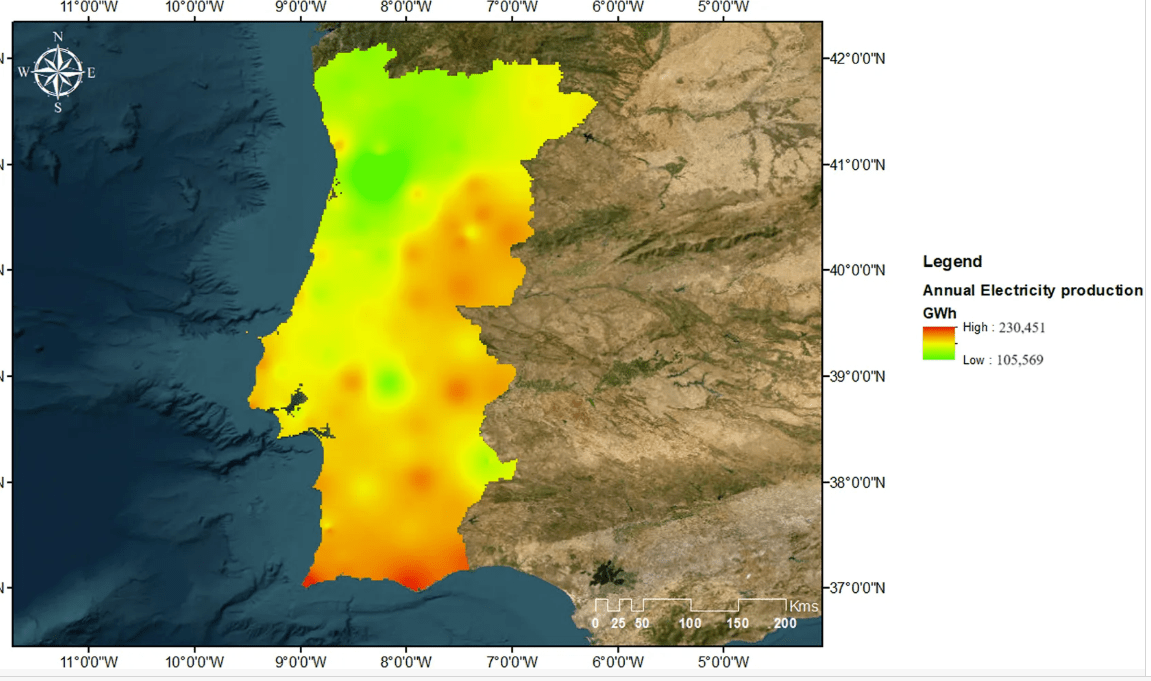
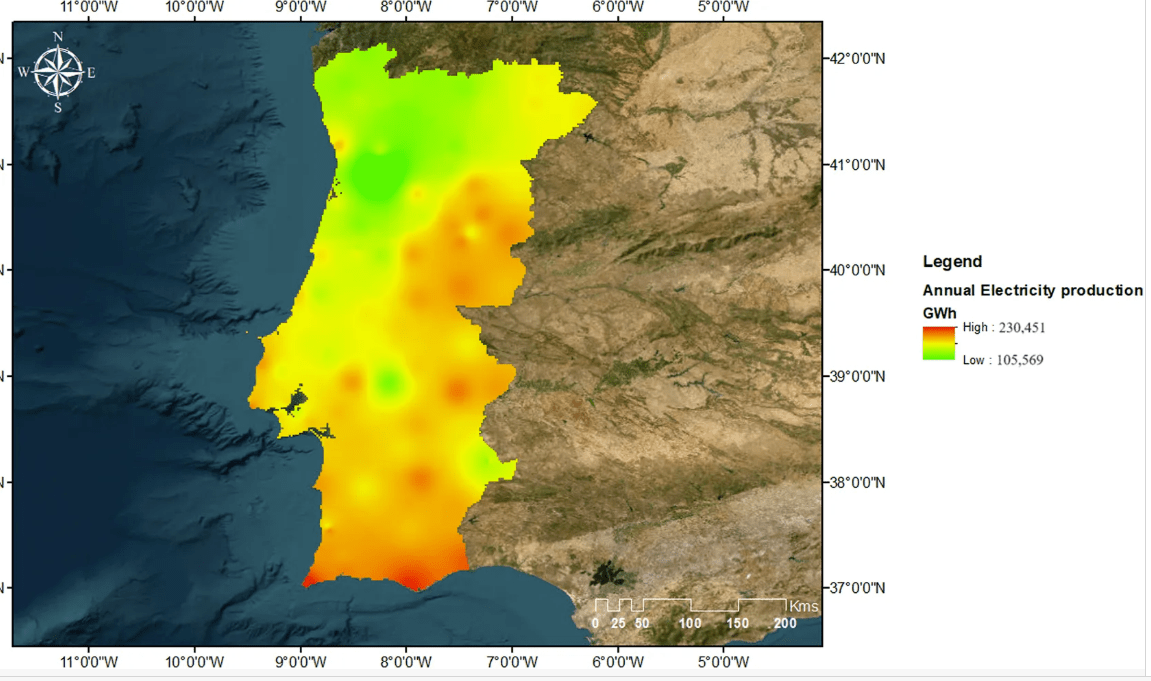
The outcome is the first national atlas of solar hydrogen potential and production costs in Portugal. The results are highly promising: in the most favourable locations, annual production can exceed 30 kg of hydrogen per installed kWp, with levelised costs below 4 €/kg. The standout regions are Alentejo, Algarve and parts of Beira Interior.
These findings position Portugal, and particularly Alentejo, as one of the most attractive and competitive locations in Europe for large-scale solar hydrogen production. They also reinforce the strategic relevance of integrated initiatives such as the H2tALENT Hydrogen Valley, demonstrating that Portugal combines strong natural resource conditions with robust techno-economic competitiveness in the emerging European hydrogen market.
Read the full publication here.
The H2tALENT project has received funding from the European Union’s Horizon Europe research and innovation programme under Grant Agreement No. 101137611.