
University of Évora: A key player in the H2tALENT project
The University of Évora, founded in 1559, is one of the oldest and most prestigious higher education institutions in Portugal. With a rich history and a forward-thinking vision, the University blends academic excellence with a deep commitment to innovation and sustainability. Located in the UNESCO World Heritage city of Évora, the University plays a vital role in the socio-economic and cultural development of the Alentejo region and beyond.
As a leader in interdisciplinary research, particularly in renewable energy and sustainability, the University of Évora is actively involved in cutting-edge projects addressing global challenges like the energy transition, climate change, and the circular economy. Its involvement in Horizon Europe projects and strong collaborations with national and international research institutions have positioned it as a key actor in the future of sustainable innovation.
In addition to its scientific work, the University is a founding member of Campus Sul, a strategic alliance with the Universities of Algarve and Nova of Lisbon, further enhancing its impact in driving regional and national progress, especially in southern Portugal.
Insights from Hugo Gonçalves Silva, project coordinator of H2tALENT
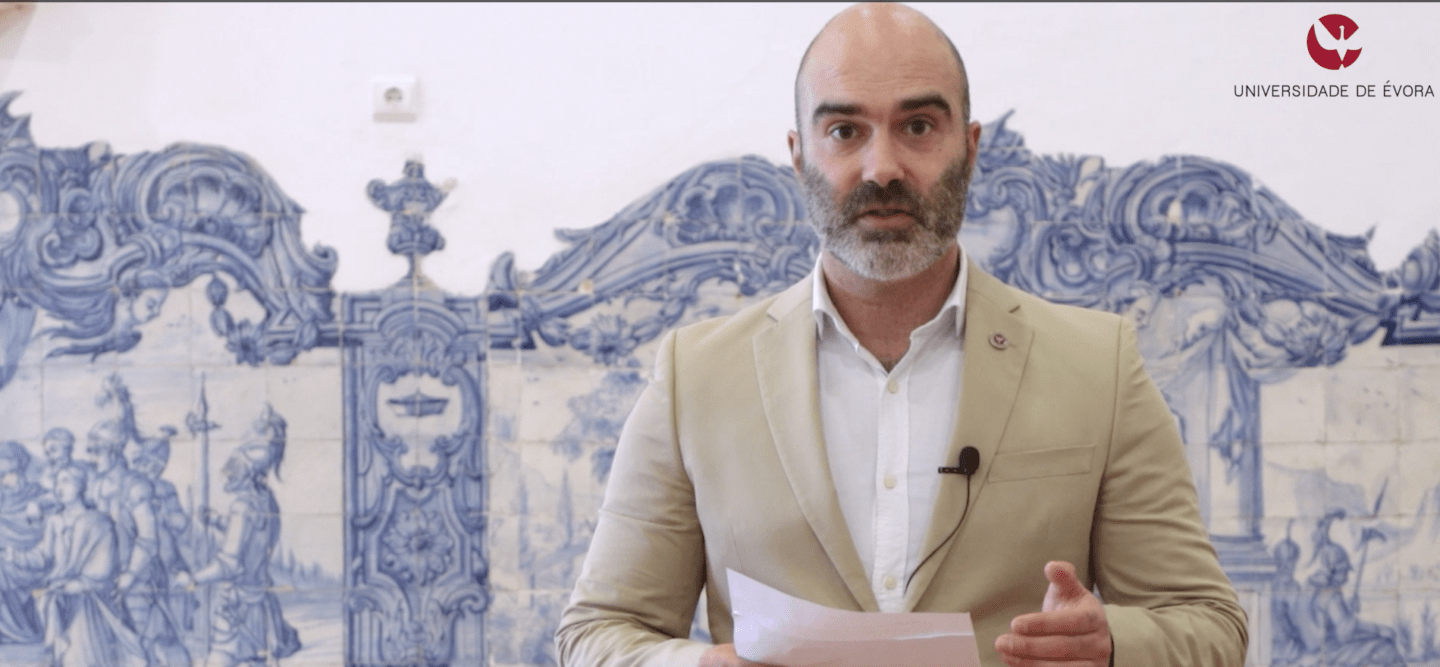
To kick off the discussion on the H2tALENT project and the University of Évora’s crucial role in it, we present a brief video featuring Hugo Gonçalves Silva, Professor at the University’s Department of Physics and the project’s coordinator. In this video, Professor Gonçalves Silva addresses key questions about the project’s objectives, the unique expertise that the University brings to the initiative, and the expectations for its successful implementation.
University of Évora’s role in the H2tALENT project
As the coordinator of H2tALENT, the University of Évora brings substantial expertise to the project, particularly in the areas of renewable energy, sustainability, and green hydrogen production. Its longstanding leadership in European research projects ensures that H2tALENT benefits from innovative approaches to addressing technical and strategic challenges.
In collaboration with its partners in Campus Sul, the University is uniquely positioned to tackle the complex issues surrounding the development of the “green” hydrogen ecosystem. This partnership strengthens the interdisciplinary approach, combining academic research, industrial collaboration, and regional development to achieve impactful results.
The University’s commitment to sustainable energy transitions aligns with the goals of H2tALENT, focusing on not just the technological but also the social and environmental dimensions of hydrogen adoption. This comprehensive approach ensures the long-term success of the project, promoting the necessary education and capacity-building efforts for stakeholders to successfully implement green hydrogen solutions in Portugal and beyond.
Looking ahead: transformative advancements in H2tALENT
The H2tALENT project is set to deliver groundbreaking advancements in green hydrogen technology and its integration into sustainable energy systems. Key milestones include the production and injection of hydrogen into the Sines pipeline for large-scale distribution, as well as the blending of hydrogen with natural gas for applications such as heating municipal pools. The project also highlights the potential for hydrogen-powered fuel-cell vehicles, including buses and trucks, to revolutionize the transportation sector.
Moreover, H2tALENT will explore innovative energy storage solutions to address the intermittency challenges of renewable energy sources. By developing digital twins and advanced planning tools, the project will ensure scalability and replication of the hydrogen valley model across different regions.
The project’s broader impacts will include fostering public engagement, creating a skilled workforce, and offering policy recommendations that support the widespread adoption of hydrogen technologies. These advancements will not only benefit Portugal but also contribute significantly to Europe’s decarbonization goals.
Collaboration between academia and industry
The University of Évora is actively fostering collaboration between academia and industry through strategic partnerships and knowledge exchange initiatives. Its involvement in Campus Sul allows it to integrate academic research with real-world applications, addressing industry needs and creating practical, impactful solutions.
In H2tALENT, the University ensures that the project outcomes meet both scientific and commercial demands by collaborating closely with technology developers, energy companies, and policymakers. This collaborative approach ensures that the innovations developed through the project are both scientifically rigorous and market-ready.
Additionally, the University places strong emphasis on workforce development and public engagement, providing training programs, workshops, and outreach activities to equip stakeholders with the necessary skills for successful implementation. This integrated strategy accelerates the adoption of green hydrogen technologies and ensures the long-term sustainability of the H2tALENT project.