
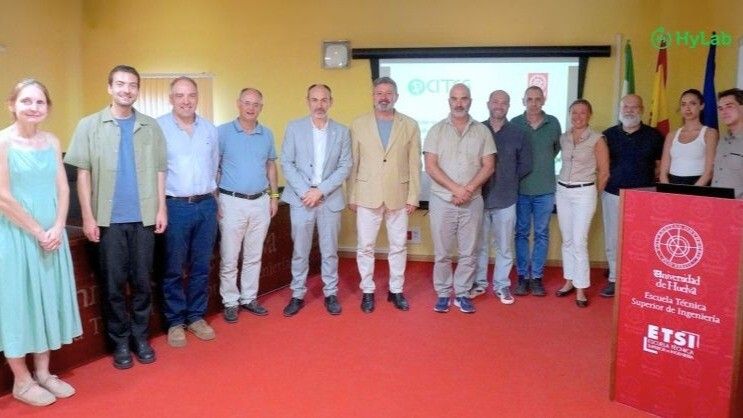
International collaboration is at the heart of H2tALENT. Beyond sharing knowledge, the project aims to accelerate the deployment of green hydrogen solutions by bringing together universities, research centres and local stakeholders to develop demonstrators that can be replicated across Europe.
In this context, representatives from the Universidade do Algarve (University of Algarve), together with researchers and partners from Portugal, travelled to CITES – Universidad de Huelva – Centro de Investigación en Tecnología, Energía y Sostenibilidad at the Universidad de Huelva (University of Huelva, Spain) to participate in a series of technical meetings, specialised training sessions and laboratory visits focused on hydrogen technologies. The mission was organised as part of the activities of the H2tALENT project and centred on one of its Portuguese demonstrators.
Advancing the Portuguese green hydrogen demonstrator
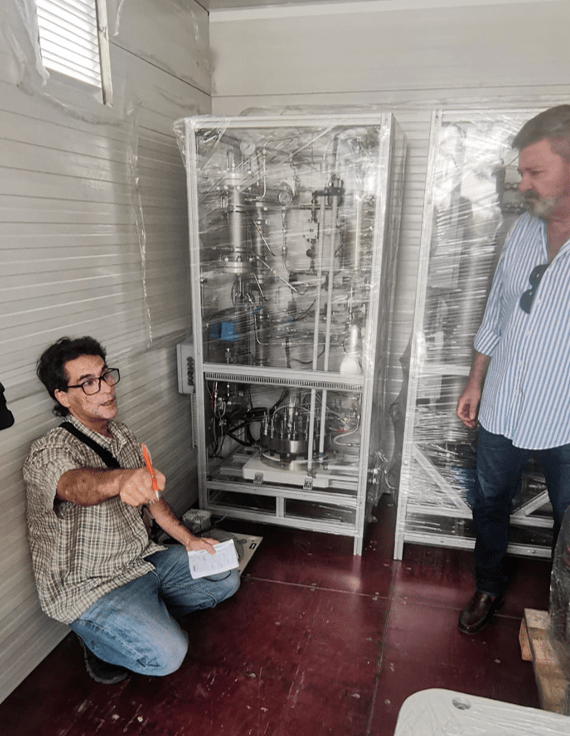
One of the main objectives of the visit was to monitor the development of the green hydrogen generation unit being built by CITES, which will later be installed in the Algarve as part of the H2tALENT demonstrators.
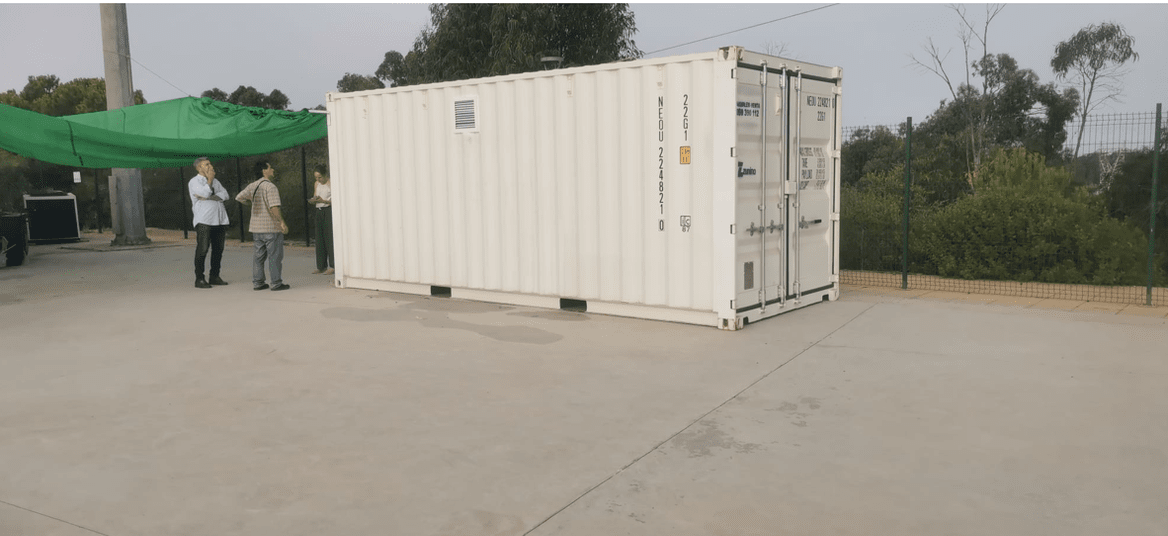
The programme also provided an opportunity to review the progress of the installation, discuss technical aspects related to its deployment and coordinate the next steps between the Spanish and Portuguese partners involved in the project.
Knowledge exchange through specialised training
The technical mission included several training sessions delivered by experts from the University of Huelva, covering key topics for the future deployment and operation of hydrogen-based energy systems.
Participants attended lectures on:
- State-space models for hybrid renewable microgrids integrated with hydrogen technologies.
- Predictive control methodologies for energy management in smart grids.
- Artificial intelligence techniques for modelling and predictive maintenance of electrolysers.
These sessions provided valuable insights into the digital tools and advanced control strategies that will support the efficient operation of future hydrogen infrastructures.
Discovering CITES’ research facilities
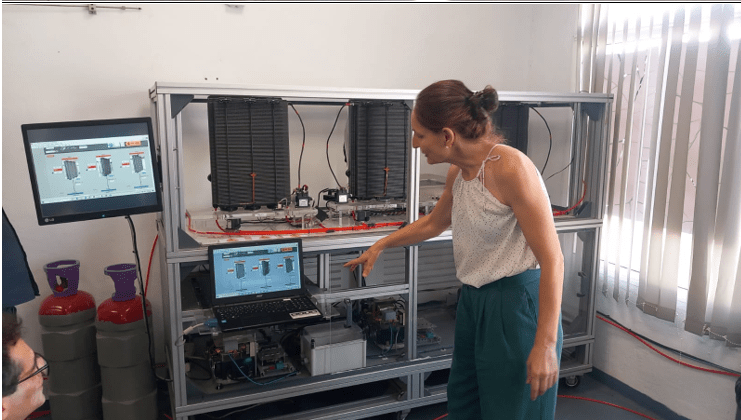
Another highlight of the visit was the guided tour of the laboratories at CITES, where participants explored ongoing research projects and experimental facilities dedicated to renewable energy, hydrogen production, storage and energy management.
Laboratory managers presented the technologies currently under development and shared their experience in transferring research outcomes into practical applications, reinforcing the collaborative spirit that underpins the H2tALENT project.
Strengthening collaboration for the next project phases
The mission concluded with a technical coordination meeting to define the next steps for the transport, deployment and installation of the hydrogen container on Culatra Island, ensuring that all partners remain aligned as the project moves towards the implementation phase.
Beyond the technical discussions, the visit reinforced the importance of international cooperation within H2tALENT. Bringing together expertise from different institutions accelerates innovation, facilitates knowledge transfer and helps ensure that the project’s demonstrators can deliver practical solutions for the transition towards a sustainable hydrogen economy.